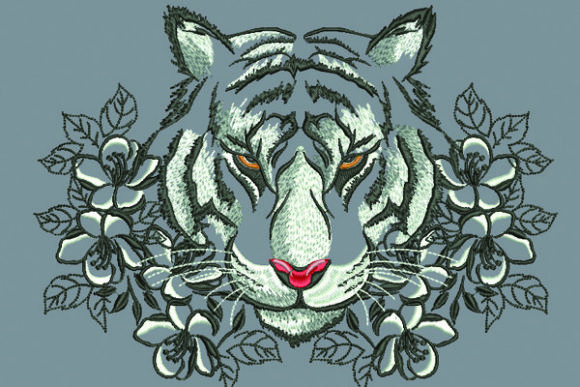
White Tiger Embroidery: A Designer’s Review for Brand Merch
As an embroidery designer who has spent years digitizing and reviewing files for commercial use, I approach every new machine embroidery design with a critical eye. It is not enough for a motif to look pretty on a screen; it must perform under the needle, withstand washing, and elevate the brand it represents. Today, I am reviewing White Tiger, a fierce and beautifully designed motif categorized under Wild Animals. This review focuses specifically on its viability for small business merchandise, branded patches, and professional apparel decoration.
First Impressions: Boldness Meets Professionalism
The immediate visual impact of White Tiger is one of controlled power. The description notes that it is "fierce and beautifully designed," which sets a high expectation for detail and attitude. In the context of branding, this design does not scream playful or rustic. Instead, it leans toward premium, bold, and modern. For a small business owner, this distinction is crucial. You are not just buying a picture of an animal; you are acquiring a visual asset that communicates strength and elegance.
When I examine the potential of this digital embroidery file, I look for clean lines and balanced negative space. A white tiger, by nature, relies on contrast. If the digitizing is poor, the stripes will blur into the white fur, resulting in a muddy patch. However, assuming the digitizer has respected the anatomy of the tiger, this design offers a sophisticated aesthetic that can work exceptionally well for boutique brands, creative studios, or high-end local businesses looking to make a statement.
Real-World Applications for Small Business Merch
Where does White Tiger fit in a commercial inventory? Its versatility is its strongest selling point, provided it is applied correctly. Here is how I envision this design performing across various product lines:
- Embroidered Patches: This is arguably the best use case. A white tiger makes for a striking central element on a twill or felt backing. It can serve as a logo accent for outdoor brands, gyms, or edgy fashion labels. The "fierce" aspect translates well to a badge of honor or team identity.
- Custom Apparel and Uniforms: For staff uniforms in creative industries, such as tattoo parlors, rock climbing gyms, or specialty coffee roasters, placing this design on the chest or sleeve adds instant character. It moves beyond generic corporate wear into the realm of custom apparel that employees are proud to wear.
- Cap Embroidery: Placing a detailed wild animal on a curved cap front requires precision. If the design is scaled correctly, it becomes a focal point that draws the eye. However, this requires careful attention to stitch direction to prevent puckering on the stiff fabric of a cap.
- Tote Bag Design: Canvas tote bags are a staple for Etsy sellers and boutique shops. A large-scale version of White Tiger can turn a simple bag into a statement piece. The white tones of the tiger will pop against natural canvas or dark denim, creating a high-contrast look that customers love.
- Apron Embroidery: For bakeries, florists, or craft studios, an apron with a subtle yet bold tiger motif suggests creativity and strength. It elevates the perceived value of the handmade product being sold by the wearer.
Navigating Technical Challenges and Fabric Constraints
While the artistic merit of White Tiger is clear, the technical execution requires diligence. As a designer, I must warn against blind application. The description states it will "stitch out beautifully on home decor, apparel, pajamas, or other creative embroidery projects." This is a broad claim, and in professional production, we must be more specific.
Stitch density is the primary concern. White areas in embroidery are often filled with satin stitches or light fill patterns. If the density is too high, the fabric may pucker or tear. If it is too low, the backing material will show through, ruining the pristine white look. Before running a full production batch, you must test this design on the exact fabric you intend to use.
Consider thread colors carefully. A white tiger is not just white; it requires shades of gray, black, and perhaps subtle blue or cream undertones to create depth. On dark uniforms, ensure you have a solid underlay to prevent the garment color from bleeding through the lighter threads. On textured fabrics like terry cloth or heavy canvas, the fine details of the tiger’s face might get lost. In such cases, simplifying the design or increasing the size is necessary to maintain clarity.
Additionally, be cautious with small patch sizes. Intricate facial features and whiskers can become a tangled mess if the hoop size is too small. Always check the recommended minimum dimensions provided with the embroidery file. If the provider does not specify, create a test stitch-out at your intended size to verify legibility.
Enhancing Brand Identity and Customer Trust
Why choose White Tiger over a generic logo? Because it builds brand identity. In a saturated market, visual consistency and memorable imagery drive recognition. A fierce, elegant tiger suggests qualities like resilience, beauty, and independence. When customers see this design on your packaging, merchandise, or staff uniforms, they associate those traits with your business.
For handmade product sellers, using high-quality design assets like this signals professionalism. It shows that you care about the details. A poorly stitched logo can detract from buyer engagement, but a crisp, well-executed tiger enhances the perceived value of the finished product. It transforms a simple item into a collectible piece of small business merch.
Practical Designer Notes for Production
Before you commit to purchasing or producing with White Tiger, follow these steps to ensure success:
- Test in Monochrome: Stitch the design out in black thread on white fabric first. This helps you evaluate the structure and flow of the stitches without the distraction of color matching. If it looks good in black and white, it will likely look great in color.
- Check Stabilizer Requirements: Given the potential complexity of a wild animal design, use a cut-away stabilizer for stretchy fabrics and a tear-away for stable woven materials. Proper stabilization is non-negotiable for maintaining the shape of the tiger.
- Verify Commercial Licensing: The description mentions it is perfect for sewing projects, but does it explicitly grant commercial rights? Always confirm the license terms before using the design for goods you intend to sell. Protect your business from legal issues by ensuring you have the right to use the digital embroidery file for commercial embroidery.
- Create a Printable Mockup: Use software to place the design on a virtual garment or patch. This helps you visualize scale and placement before wasting thread and fabric. Share this mockup with clients for approval if you are doing custom work.
- Inspect Hoop Size Compatibility: Ensure your machine’s hoop can accommodate the design’s dimensions. If the design is larger than your standard hoop, you may need to use a multi-positioning technique, which increases the risk of misalignment.
In conclusion, White Tiger is a potent addition to any embroidery designer’s library. It bridges the gap between artistic expression and commercial viability. By respecting the technical requirements of stitch density, fabric texture, and proper stabilization, you can leverage this fierce design to create standout merchandise that resonates with customers and strengthens your brand presence. Whether for a cap, a tote, or a branded patch, this wild animal motif offers the boldness needed to cut through the noise in today’s marketplace.